
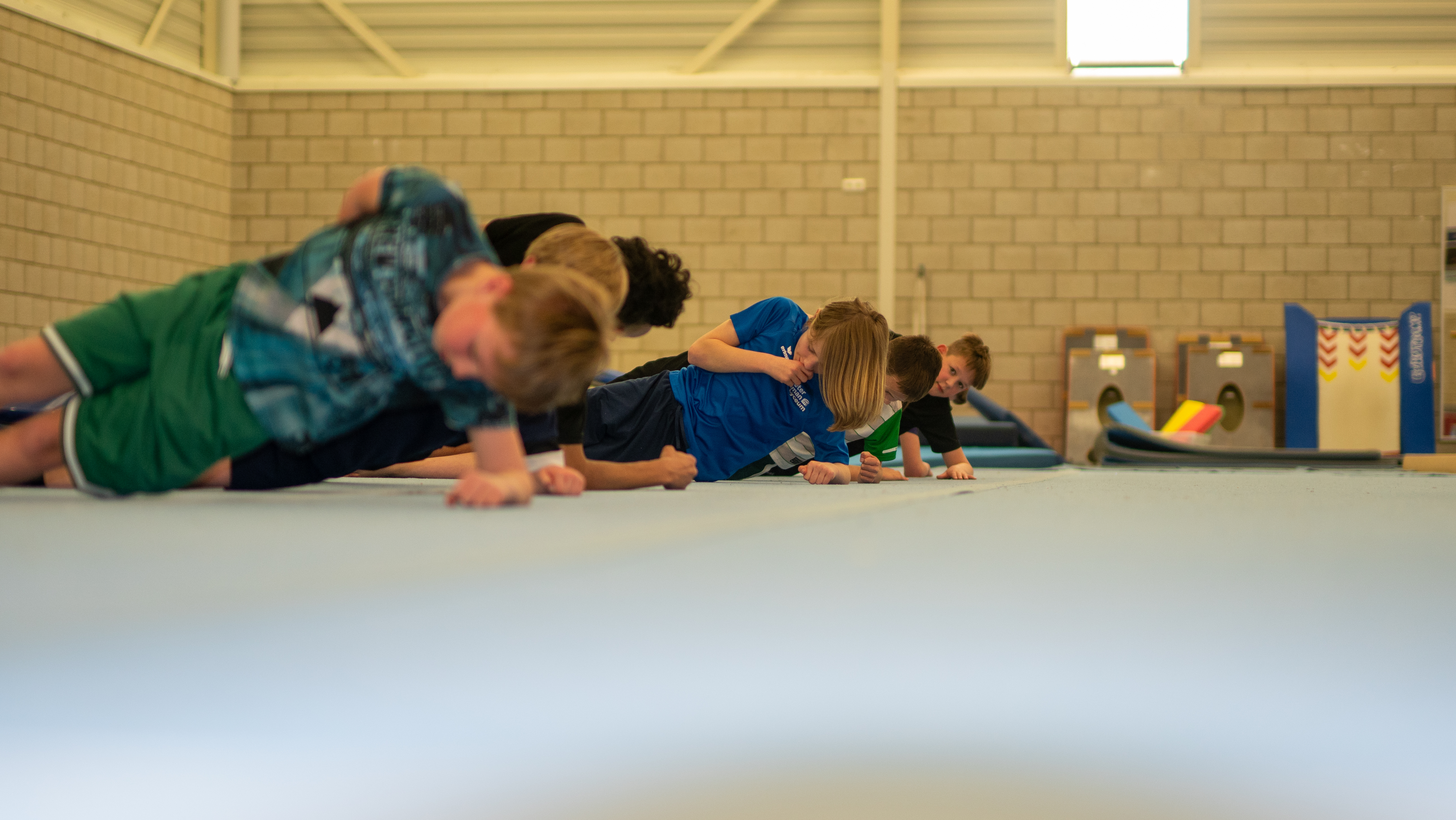
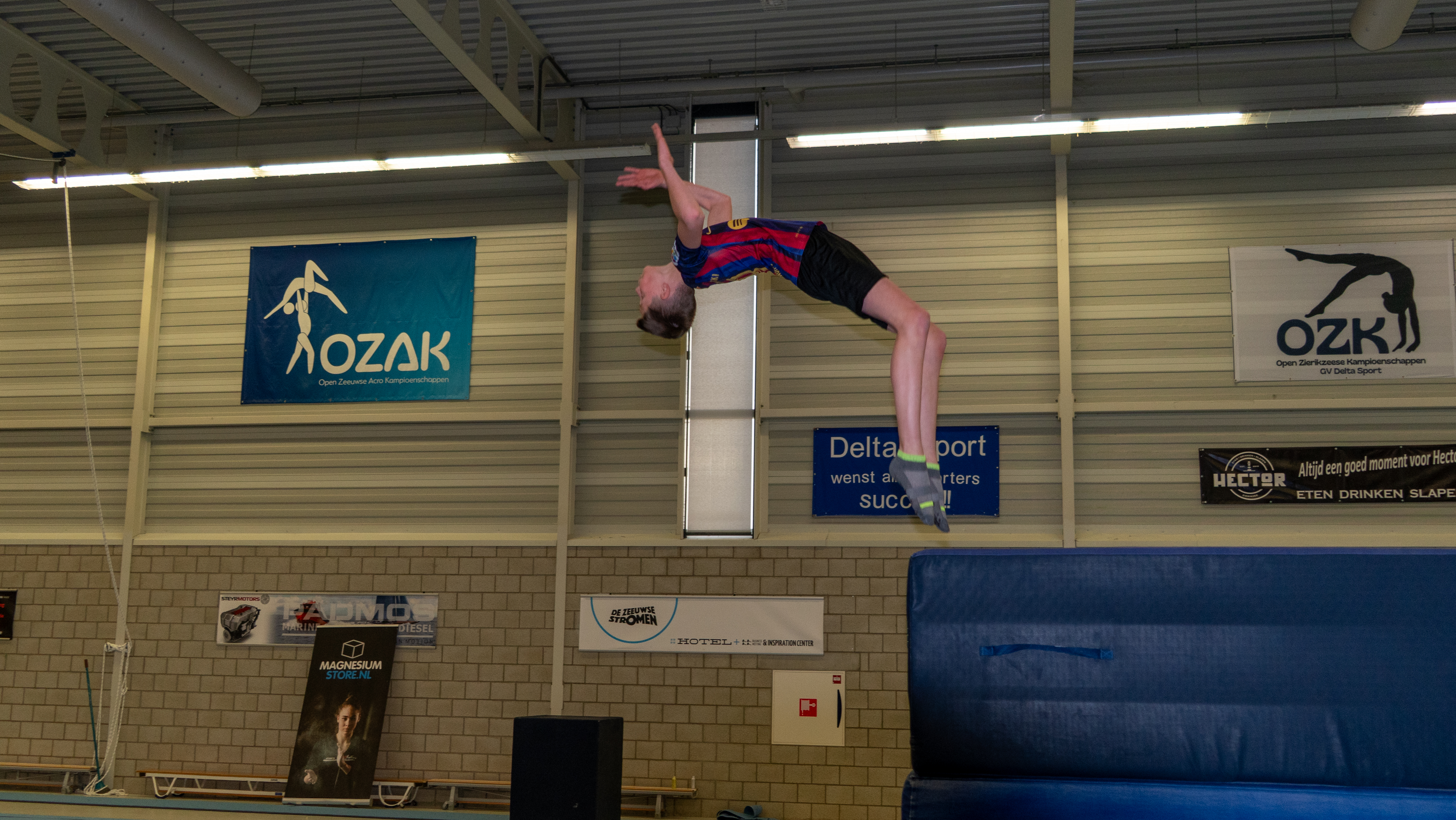
During our training sessions, participants work step by step on the fundamentals of freerunning. The focus is on developing control over the body, learning to judge movements, and executing techniques correctly. A training session consists of several parts. We usually start with a group warm-up, followed by working on specific techniques. These can include jumps, vaults, precision jumps, or rolls. Exercises are built up gradually, allowing everyone to practice and improve at their own pace. Enjoyment in movement is important, but technique and structure always form the foundation. By focusing on landings, control, and repetition, new movements are learned in a consistent and structured way. On this page, we explain the different parts of our training sessions in more detail. For the training sessions, please bring: Flips are flips and other acrobatic movements where the body fully rotates in the air. This is often the part people associate with freerunning first. Within our training, flips are built up step by step. The foundation starts with developing a proper take-off, body control, and orientation in the air. An important tool for this is the foam pit in the gym. In this area, participants can practice rotations and get used to being upside down while completing movements.Training
What to bring
Flips
Vaults
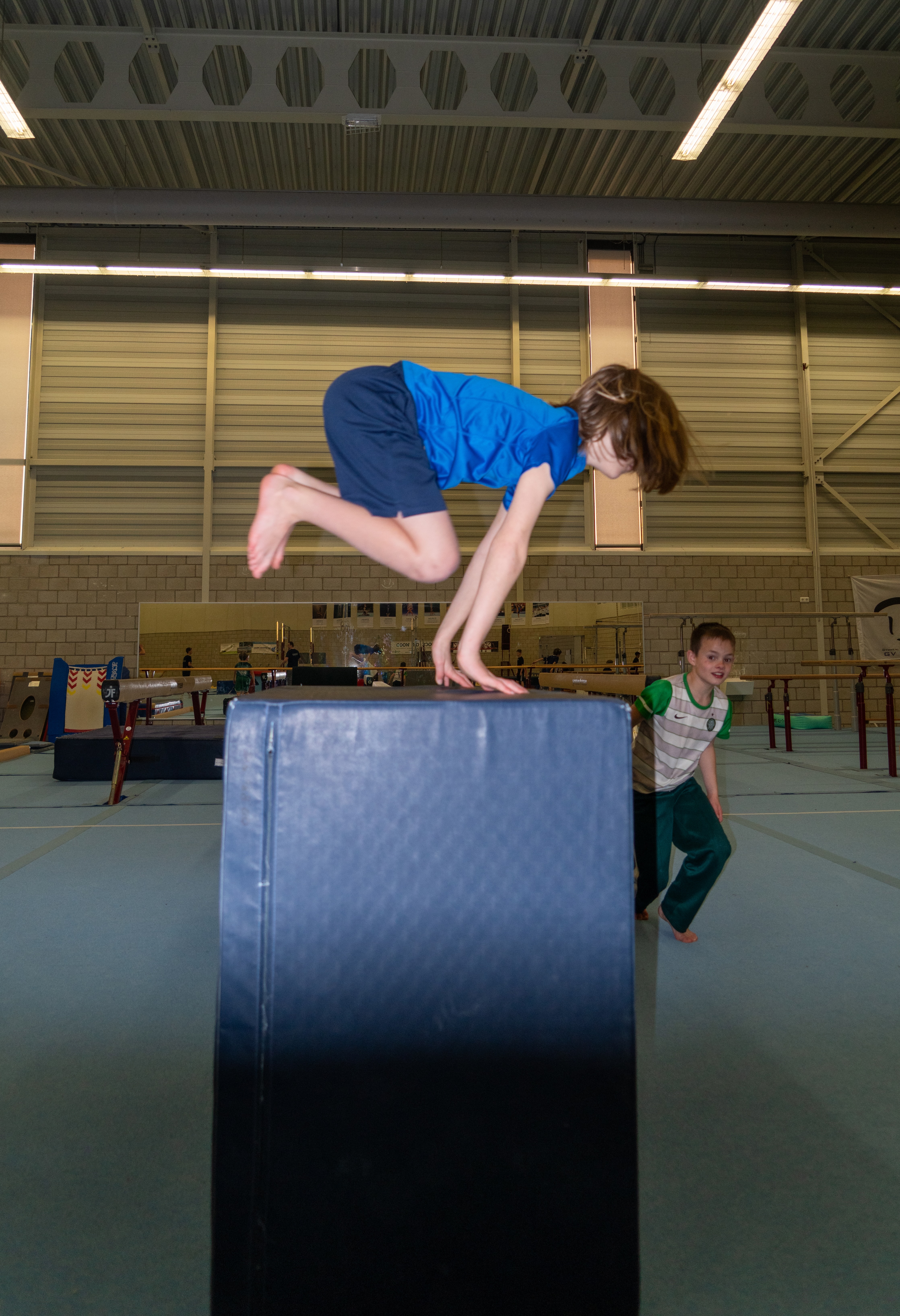
Vaults are techniques used to move over obstacles such as walls, blocks, benches, or other objects. Instead of going around an obstacle, participants learn how to use their entire body to move over it smoothly.
Within freerunning, there are many different types of vaults. In our training, we cover more than twenty variations, each with its own way of approaching and passing an obstacle. Common examples include the speed vault, kong vault, lazy vault, and dash vault.
The reason for these different techniques is that every situation is different. The choice of vault depends on factors such as the height of the obstacle, the speed of approach, and the direction of movement afterward. Some vaults are focused on maintaining speed, while others help overcome height or change direction.
By learning different vaults, participants develop multiple ways of approaching obstacles and can adapt their movement to different situations.
Safety
Safety is an important part of freerunning. It can be a physically demanding sport, so we always start with the basics.
During the first training sessions, participants learn:
- How to land properly after a jump
- How to absorb impact with the legs
- How to protect the body during a fall
- The shoulder roll (also known as the parkour roll)
The shoulder roll is one of the key techniques within freerunning. It allows participants to spread the force of a landing across the body instead of placing all impact on the knees or ankles.
Precision
Precision is about accurate jumping and controlled landings. The goal is to perform a jump as precisely as possible and land in a stable position on a small or narrow surface.
This can include movements such as jumping from wall to wall, from floor to wall, or swinging from a bar onto a wall.
In precision jumps, the focus is on judging distance and timing. Participants learn to prepare their jump, apply force at the right moment, and land in control without losing balance. This is often referred to as “sticking” a landing — landing and remaining stable without taking a step.
Precision is an essential part of freerunning, as many movements begin or end with a controlled jump.